





















A connected factory is not simply a factory with more sensors.
It is a manufacturing environment where machines, data, people, and processes work together to give teams better visibility and faster ways to act. For small and mid-sized manufacturers, this does not necessarily mean replacing existing systems or investing in a complete smart factory transformation at once. A practical approach can start with one machine, one production line, or one operational problem and expand from there.
The foundation is simple:
What Does a Connected Factory Actually Mean?
A connected factory brings operational data out of isolated machines, spreadsheets, and manual processes and makes it available where teams can use it.
That could mean:
A supervisor viewing production performance in real time
Maintenance receiving an alert before equipment failure
Quality teams tracing a component digitally
Managers comparing performance across production lines
Operators accessing digital work instructions at the point of work
The objective is not more technology. It is fewer blind spots.
The Three Technologies Behind the Connected Factory
Cloud: Make Information Accessible
Cloud platforms provide the infrastructure for storing and accessing manufacturing data. They can support:
- Production dashboards
- Centralized data storage
- Remote access
- Multi-site visibility
- Scalable infrastructure
IoT: Capture What Is Happening
IoT connects physical assets to digital systems. Sensors and connected devices can capture:
- Machine temperature
- Vibration
- Production cycles
- Equipment status
- Energy consumption
- Equipment performance
Data: Turn Information Into Decisions
IoT creates data. Cloud infrastructure makes it accessible. Data integration and analytics make it useful.
- Machine data combined with ERP, MES, quality, and maintenance systems
- A broader picture of operations
Instead of keeping information locked inside individual machines or local systems, cloud platforms can make relevant data available across the organization. IoT, in turn, creates a continuous stream of operational data instead of relying entirely on manual readings or end-of-shift reports. With data in place, teams can move from:
Where Connected Factories Create Value
Production Visibility
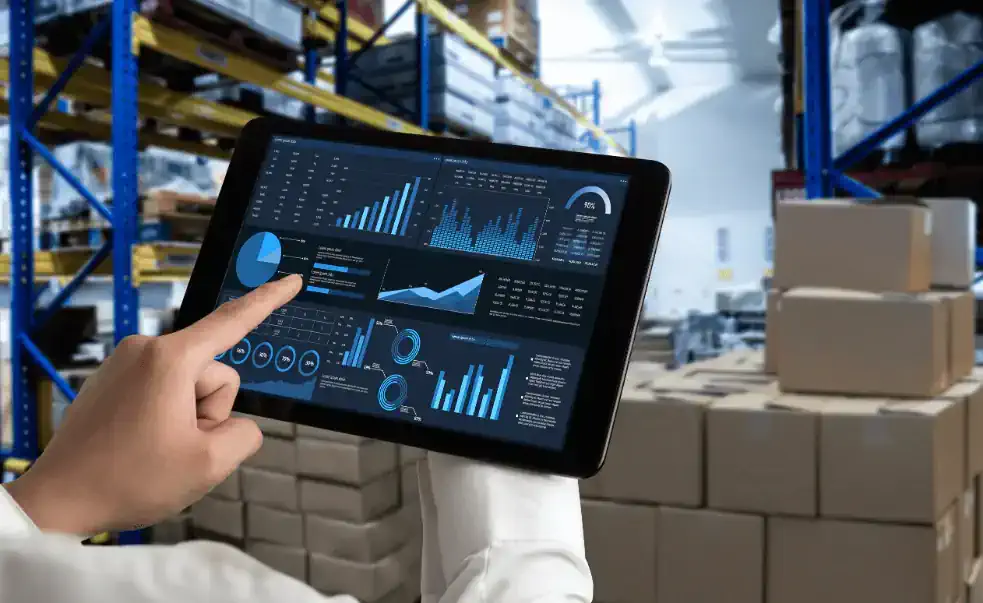
Real-time machine and production data can give supervisors a clearer view of output, cycle times, downtime, and line performance. Instead of waiting for reports, teams can identify issues while production is still running.
Predictive Maintenance
Machine condition data such as vibration and temperature can help identify unusual patterns. Combined with analytics, this can support earlier maintenance decisions and reduce reliance on reactive repairs.
Connected Quality
Digital quality workflows can replace disconnected paper records with traceable digital information. Inspection results can be linked to products, batches, machines, or operators, making it easier to investigate quality issues and prepare for audits.
Energy Monitoring
Connected meters can provide visibility into electricity, water, compressed air, gas, and other resource consumption. Teams can identify unusual usage, leaks, inefficient equipment, and opportunities to reduce waste.
Digital Operator Support
Cloud-based work instructions can provide operators with standardized procedures, images, videos, and process information directly where the work happens. This can support faster onboarding and more consistent processes across shifts.
Smarter Planning
Production data can also feed planning and scheduling systems. Actual machine performance, production rates, capacity, and downtime can provide planners with better information than manually maintained spreadsheets alone.
The Connected Factory Journey
A connected factory does not have to be built all at once. A practical transformation can follow five stages:
Find the Gap
Identify where limited visibility is creating downtime, waste, quality problems, or delays.
Choose One Use Case
Start with a measurable problem such as machine downtime, production monitoring, or energy consumption.
Build a Pilot
Connect a small number of machines, sensors, dashboards, or workflows.
Measure the Result
Track relevant KPIs such as uptime, yield, downtime, energy consumption, or quality performance.
Scale What Works
Once the approach is validated, extend it to additional equipment, production lines, locations, and business systems.
This avoids a costly “rip and replace” approach and allows the factory to evolve based on actual results.
What a Connected Factory Can Look Like
Consider a manufacturing line where machine data, quality information, and production performance previously existed in separate systems. A connected architecture can bring them together:
Now an unusual machine condition can trigger an alert, production data can provide context, and maintenance can respond before the issue becomes a larger disruption. The value comes from the connection between systems, not from any individual technology.
Start Small. Connect What Matters.
The biggest mistake in connected manufacturing is trying to digitize everything at once. Start with the problem that has the clearest business impact.
If downtime is the issue, begin with machine monitoring.
MonitorIf energy costs are the issue, begin with connected energy meters.
MeterIf quality traceability is the issue, begin with digital inspection and tracking.
TrackOnce the first use case proves its value, the same architecture can become the foundation for broader transformation.
From Factory Data to Factory Intelligence
A connected factory creates a continuous loop:
Cloud provides the infrastructure. IoT connects the physical environment. Data provides the intelligence. Together, they can help manufacturers build operations that are more visible, responsive, and adaptable. The goal is not to create a factory filled with technology. The goal is to create a factory that can see what is happening and respond intelligently.
Build Your Connected Factory
Infysion helps manufacturers connect industrial assets, IoT systems, cloud platforms, data, analytics, and existing business applications. From an initial pilot to a broader connected manufacturing environment, the focus is on building practical solutions around measurable operational needs. Start with one connected use case and build from there.
Contact usFAQ
What is a connected factory?
A connected factory uses IoT, cloud, data integration, and analytics to connect machines, systems, people, and processes for better operational visibility and decision-making.
Does building a connected factory require replacing existing systems?
Not necessarily. Existing ERP, MES, quality, maintenance, and other systems can often be integrated into the connected architecture.
Where should a manufacturer start?
Start with a specific operational problem that can be measured, such as downtime, production visibility, quality traceability, or energy consumption.
How does IoT contribute to a connected factory?
IoT connects machines, sensors, and physical assets so that operational data can be collected and made available to digital systems.
What role does the cloud play?
Cloud platforms provide scalable infrastructure for storing, processing, analyzing, and accessing manufacturing data across users and locations.