




































Energy is one of the largest operating costs across manufacturing, utilities, and other industrial environments.
Yet many organizations still rely on periodic meter readings or disconnected systems to understand where energy is being consumed. Industrial IoT changes this by connecting sensors, machines, edge devices, communication networks, and analytics platforms into a continuous flow of operational data. A well-designed Industrial IoT architecture for real-time energy monitoring can help organizations identify abnormal consumption, understand equipment performance, reduce energy waste, and make faster operational decisions.
Key Takeways
- Industry accounts for nearly 40% of global final energy demand, while industrial energy efficiency improvement has slowed to around 0.2% per year since 2019 — which makes granular, real-time energy visibility more important than ever.
- A real-time IIoT energy monitoring architecture works as six connected layers: Sense, Process, Connect, Store, Analyze and Secure.
- Edge gateways aggregate and filter sensor data, translate industrial protocols, detect anomalies and trigger local alerts, so less raw data has to travel to centralized platforms.
Why Energy Visibility Matters
The scale of industrial energy consumption makes visibility increasingly important. The International Energy Agency reports that industry accounts for nearly 40% of global final energy demand. It also accounted for 80% of the increase in global final energy demand between 2019 and 2023. At the same time, industrial energy efficiency improvement has slowed to around 0.2% per year since 2019, compared with almost 2% annually during the previous decade. That creates a clear need for better, more granular energy intelligence.
Energy Monitoring in Numbers
The challenge is no longer simply collecting energy data. It is building an architecture that turns that data into something operations teams can act on.
The Architecture: From Sensor to Insight
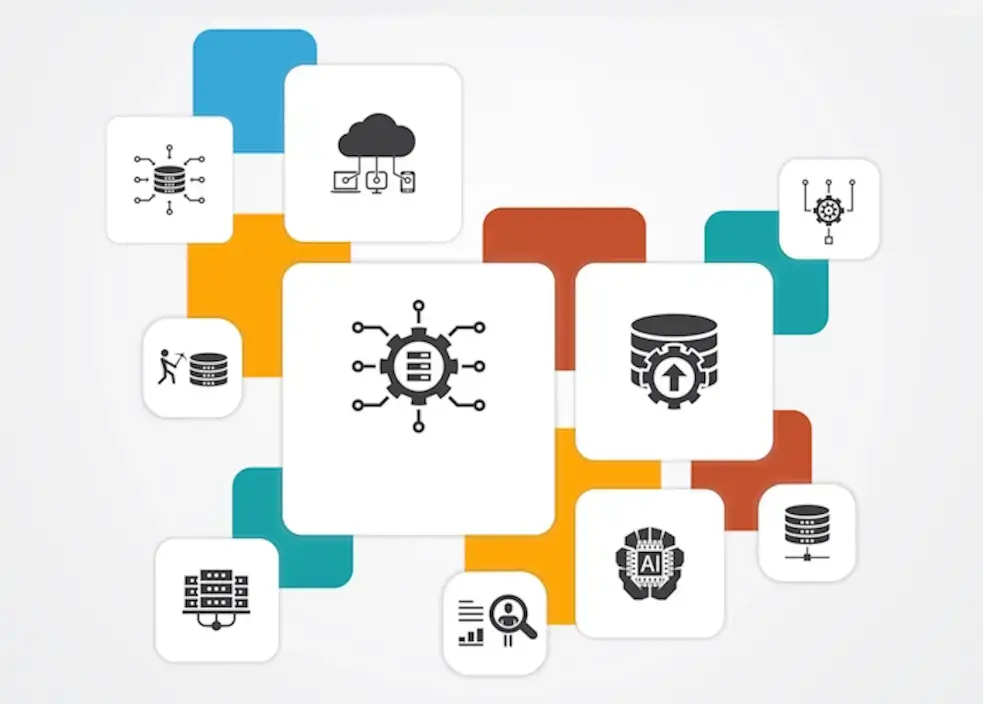
A real-time IIoT energy monitoring architecture can be viewed as six connected layers:
- Sense
- Process
- Connect
- Store
- Analyze
- Secure
Each layer has a different responsibility, but together they create the foundation for real-time energy intelligence.
Sense: Capture Energy and Equipment Data
The architecture begins at the physical layer. Depending on the environment, organizations can collect data from:
- Smart energy meters
- Current transformers
- Voltage sensors
- Power-quality sensors
- Temperature sensors
- Vibration sensors
The important consideration is not simply how many sensors are deployed. Data should be collected according to the questions the business needs to answer. Monitoring a production motor may require energy consumption, current, temperature, and vibration data to understand both efficiency and equipment condition.
Process: Add Intelligence at the Edge
Industrial systems can generate large volumes of data. Processing everything in the cloud can increase bandwidth requirements and create unnecessary delays. Edge computing allows selected data to be processed close to the equipment. An edge gateway can:
- Aggregate sensor data
- Filter unnecessary information
- Translate industrial protocols
- Detect anomalies
- Trigger local alerts
- Forward relevant information to the cloud
This makes the architecture more responsive while reducing the amount of raw data that needs to travel to centralized platforms.
Connect: Move Data Across the Industrial Environment
The connectivity layer links sensors, machines, edge gateways, and centralized platforms. Depending on the facility, this can include:
- Ethernet
- Modbus TCP
- Industrial fieldbus
- Wi-Fi
- LoRaWAN
- NB-IoT
- 4G
- 5G
Connectivity needs to be designed alongside security. Authentication, encryption, network segmentation, and controlled access help protect data as it moves between operational and IT environments.
Store: Build a Unified Data Foundation
Once data is collected and transmitted, it needs to be stored in a way that supports both real-time monitoring and historical analysis. A centralized data platform can bring together information from:
- Energy meters
- Production equipment
- Multiple production lines
- Different facilities
- Environmental sensors
- Maintenance systems
A common view of energy performance that makes it easier to compare consumption across assets, shifts, production processes, or locations.
Analyze: Turn Energy Data Into Action
The analytics layer transforms raw readings into operational intelligence. Real-time dashboards can highlight unusual consumption, sudden energy spikes, equipment anomalies, and changes in operating patterns. Historical data can support more advanced analysis, including predictive models that identify potential problems before they affect production. A typical workflow could look like:
- Energy spike
- Anomaly detected
- Alert generated
- Cause investigated
- Corrective action
This is where energy monitoring moves beyond visibility and starts supporting operational decisions.
Secure: Protect Every Layer
Energy monitoring systems connect physical assets with digital infrastructure, so security needs to cover the entire architecture.
- Devices
- Edge
- Network
- Data Platform
- Applications
- Users
Key controls can include:
- Device authentication
- Encryption
- Identity and access management
- Network segmentation
- Secure firmware and software updates
- Activity monitoring
- Logging and auditing
Security should be incorporated during architecture design rather than added after deployment.
Designing an Architecture That Can Scale
A common mistake is trying to connect an entire industrial environment from day one. A better approach is to start with a measurable operational problem.
- StartSelect one facility, production line, or group of energy-intensive assets.
- ValidateCheck sensor accuracy, connectivity, data quality, dashboards, and alerts.
- IntegrateConnect energy information with maintenance, production, or enterprise systems.
- ScaleExtend the architecture across additional assets, production lines, and facilities.
This creates a repeatable architecture while allowing teams to demonstrate value before expanding the deployment.
From Energy Monitoring to Operational Intelligence
Real-time energy monitoring becomes more valuable when it is connected to the broader industrial environment. Energy consumption can be analyzed alongside production output, machine condition, maintenance activity, and environmental conditions. The result is a progression from:
- 01Measure
- 02Understand
- 03Detect
- 04Act
- 05Optimize
This is where Industrial IoT becomes more than a monitoring technology. It becomes a foundation for improving how industrial operations are managed.
Build a Connected Energy Monitoring Architecture
A successful IIoT energy monitoring system requires more than connected sensors. It needs the right combination of industrial connectivity, edge computing, data infrastructure, analytics, and security. With the right architecture, organizations can move from fragmented energy readings to a connected view of industrial performance. Infysion helps enterprises design and build Industrial IoT solutions that connect industrial assets, data, analytics, and intelligent applications. Explore Industrial IoT Consulting and IoT Engineering capabilities to build a scalable, data-driven industrial environment.
Contact usFAQs
What is an Industrial IoT energy monitoring architecture?
It is a connected system that combines sensors, edge devices, industrial networks, data platforms, analytics, and security to monitor and analyze energy consumption across industrial environments.
What can an IIoT energy monitoring system measure?
Depending on the use case, it can monitor energy consumption, current, voltage, power quality, temperature, vibration, and other equipment parameters.
Why is edge computing useful for energy monitoring?
Edge computing allows data to be processed closer to industrial equipment, helping reduce latency, bandwidth requirements, and dependence on continuous cloud connectivity.
Can the architecture scale across multiple facilities?
Yes. A modular architecture can begin with a small pilot and expand across production lines, plants, and geographically distributed facilities.